
Business Overview : Aerospace Company

Revenue

Operating Profit

Primary Products and Services
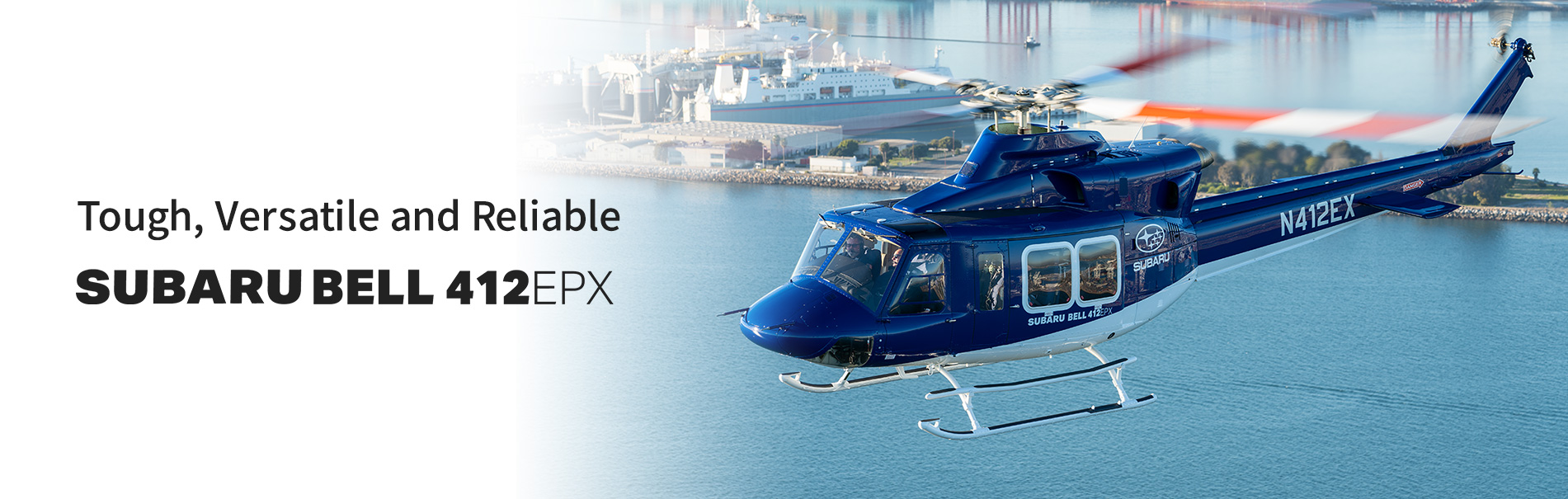
- SUBARU BELL 412EPX
- UH-2 utility helicopter
- T-5 and T-7 trainers
- Flying Forward Reconnaissance System
- The Center Wing Section of Boeing 787
- The Center Wing Section of Boeing 777 & 777X
Business Overview and Outlook
-
Defense Business
For half a century, we have been providing support for overall operations, including aircraft manufacturing as well as scheduled maintenance and overhaul, spare parts supply, and training, for programs such as Japan Air Self-Defense Force and Japan Maritime Self-Defense Force training aircraft systems, as well as Japan Ground Self-Defense Force utility and combat helicopters. We also participate in the development of major defense aircraft systems in Japan, including fighter, transport, and patrol aircraft. Focusing on our areas of expertise such as main wings and tail assemblies, we are responsible for the development and production of major components. Furthermore, in the field of unmanned aircraft, where we have accumulated technology for over 50 years and boast a significant track record in development, we are actively engaged in the research and development of future systems.
In December 2022, the Ministry of Defense announced its Defense Buildup Program, which included significant defense expansion amid momentum to strengthen national security. SUBARU will contribute to the defense of Japan by supporting the activities of the Japan Self-Defense Forces in multiple ways, including ensuring on-time delivery of aircraft, supporting the field of intelligence gathering and operational support through unmanned aircraft technology, participation in development projects for next-generation fighters, and operational support, maintenance, parts supply, and educational support for Japan Self-Defense Force aircraft.
 The T-5 Japan Maritime Self-Defense Force training aircraft
 -
Commercial Business
Since first participating in the Boeing commercial aircraft program in 1973, SUBARU has been involved in development and production as a key partner of Boeing for more than 50 years. SUBARU manufactures the center wing box, the critical aircraft section where the left and right wings are integrated with the front and rear fuselage. Since the center wing contains the aircraft’s fuel, Boeing requires that we provide high strength and high fluid tightness. By manufacturing these center wing boxes with advanced design and assembly technologies, we have earned high ratings from Boeing. The Handa Plant, located in Handa City, Aichi Prefecture, is one of the uniquely specialized production centers for large aircraft center wing boxes in the world, having produced center wing boxes for the Boeing 777, 787, and 777X aircraft for over 30 years, as well as the P-1 patrol aircraft for the Maritime Self-Defense Force and the C-2 transport aircraft for the Air Self-Defense Force. This plant has manufactured a cumulative total of over 3,000 aircraft.
Air passenger demand has recovered from the downturn caused by the COVID-19 pandemic and is expected to grow by about 4% annually. With the increase in the movement of people accompanying economic growth and the resulting forecasted increase in aircraft use, more than 30,000 new aircraft are expected to be needed over the next 20 years, and demand for the 777, 787, and 777X is expected to increase further. Toward further business growth, we intend to actively participate in international joint development projects, including the development of commercial aircraft, as a major partner of Boeing, which possesses more advanced technological capabilities.
 Center wing box
 Center wing box manufactured at the Handa Plant
 -
Helicopter Business
SUBARU manufactures the UH-2 utility helicopter used by the Japan Ground Self-Defense Force and its commercial version, the SUBARU Bell 412EPX, at its Utsunomiya Plant in Utsunomiya City, Tochigi Prefecture. The UH-2 supports air transportation, lifesaving, and rescue missions during disasters, evacuation of residents, firefighting, and a range of other missions to protect the safety and security of the general public. The SUBARU BELL 412EPX is expected to enjoy broad use in Japan and around the world, mainly for police, firefighting, and disaster prevention applications, as an aircraft with high reliability and excellent serviceability that can operate under harsh conditions. We will consistently support safe and reliable flight operations for its customers as a company with manufacturing and maintenance bases in Japan, not only by manufacturing and selling aircraft, but also through after-sales support, including supplying parts and performing scheduled maintenance.
The UH-2 will be manufactured as planned in accordance with the Ministry of Defense's Defense Buildup Program. In addition, more than 200 helicopters, including those we have manufactured to date, are owned and operated by government agencies such as the police, fire department, and Japan Coast Guard, and demand is expected to increase for replacing the fleet of helicopters currently in service. By leveraging the expertise accumulated through our long history of helicopter production, we will continue to meet social responsibilities and expectations, while engaging in challenging businesses that span both the defense and commercial sectors.
 SUBARU BELL 412EPX
 The UH-2 Japan Ground Self-Defense Force utility helicopter
Initiatives to Improve Productivity in Both Defense and Commercial Businesses
-
The Aerospace Company is engaged in what we call “True Reform Initiative”: Company-wide productivity improvements across departments with the aim of continuously strengthening our competitiveness. Particularly at manufacturing sites, we focus on two key areas—improving workability and optimizing logistics—and are consistently rolling out frontline-driven improvement activities.
The defense and helicopter businesses fundamentally practice high-mix, small-lot production, and require designs that meet the specifications and applications of each model. In addition, since aircraft are expected to operate for 30 to 40 years after manufacture, regular replacement of parts and production of spare parts are essential elements. These unique business characteristics have led to an extreme diversity of parts, and in some cases it takes several years to remanufacture the same part.
Remanufacturing requires reconfirmation of manufacturing procedures and procurement of materials, and each part must be handled differently, which can easily lead to structural inefficiencies. To address these issues, we are working toward overall visualization of operations, as well as simplification and standardization of work to drastically improve workability. In addition, we have simplified the structure within the plant by optimizing the amount of parts and jig tools stored and their storage locations, and have built a system that enables more efficient supply of high-mix, small-lot parts to the manufacturing site, thereby achieving high production efficiency in terms of logistics.
 Confirmation meeting for improving roductivity
at manufacturing sites -
Growth Strategy for the Commercial Aircraft Business
The commercial aircraft market is expected to see continued demand growth, and SUBARU is determined to seize this growth opportunity to further expand its business. In particular, to meet increasing demand for Boeing center wing boxes, we are accelerating measures to improve productivity, including employee training, quality control, and shortening of manufacturing cycles, in order to increase our competitiveness in terms of quality, delivery, and cost, and to strengthen our presence in the global market.
A Sustainable Aircraft Manufacturing System With 800 Partners
-
The aircraft industry is an advanced manufacturing field that handles about 100 times as many parts as the automobile industry, and its production system is supported by a multi-layered and extensive division of labor. Within this complex structure, the supply chain is a crucial strategic element in ensuring quality, delivery, and safety. Our Aerospace Company has established strong partnerships with approximately 800 business partners, all of whom we consider our co-value creators. SUBARU shares challenges with its business partners and works together toward their resolution to achieve sustainable and competitive growth.
As one example, in response to the growing labor shortage, we sponsor matching events in cooperation with the national and local governments, as well as local high schools and universities, to help secure young talent. This is not merely an effort to secure human resources, but also to enhance the sustainability of the entire industry through co-creation with local communities. Furthermore, in preparation for future production increases, we are working with our business partners to improve productivity and strengthen quality assurance systems, thereby raising the competitiveness of the industry as a whole. Under our One SUBARU philosophy, we will build a robust Monozukuri system involving the entire supply chain to accelerate global value creation in the aerospace field.
 Matching event
SUBARU’s Technological Development Supporting Aircraft Safety
-
Safety is an unwavering prerequisite for aircraft that soar through the skies. For aircraft manufacturers, safety is the very core of our social responsibility. As the global demand for aircraft grows and flight opportunities increase, preventing accidents and further improving safety are more important than ever. Analysis of past aviation accidents has shown that many of them were caused by human error. In particular, small aircraft such as helicopters are mostly operated using Visual Flight Rules1, which rely heavily on pilot judgment and skill in a complex flight environment.
To address these issues, SUBARU is actively developing technologies to reduce the burden on pilots and improve flight safety. For example, the development of support systems, such as obstacle detection systems, complement the pilot’s visibility and reduce risk. We are also focusing on ensuring safety in case of contingencies, and are evolving analytical and test evaluation technologies to ensure the safety of passengers in the event of a falling aircraft. In evolving these technologies, we are also applying the knowledge we have gained in the development of Passive Safety technology in the Automotive Business Unit. We are developing technologies to further ensure safety, such as analyzing the effects of drop impact on occupants in fixed-wing aircraft and conducting full-scale drop tests using automobile crash test dummies. In order to continue to fulfill our responsibilities as an aircraft manufacturer, we will continue our efforts to prevent accidents and improve safety by combining our technologies and expertise.
*1:A method where the pilot flies the aircraft by visually determining the aircraft’s position and attitude and the surrounding situation.
 Full-scale drop test using an automobile crash test dummy
New Possibilities for Unmanned Aircraft Based on More Than 50 Years of Accumulated Technology
-
Since 1970, we have been engaged in the technological development and mass production of unmanned aircraft. To date, we have manufactured more than 800 craft in 20 models. Our remotely piloted observation system and flying forward reconnaissance system, both helicopter-based unmanned aircraft systems, were mass-produced and deployed in the Japan Ground Self-Defense Force as the first mission-oriented unmanned aircraft in the Japan Self-Defense Forces. In recent years, we have been conducting research and development of more advanced technologies to meet the increasing sophistication of functions required by the diversification of the Japan Self-Defense Forces' missions. As part of these efforts, on July 9, 2025, we delivered an experimental aircraft to the Acquisition, Technology & Logistics Agency for research on remotely operated support aircraft technology2.
Conventional unmanned aircraft generally fly based on a pre-set program and are controlled by a dedicated operator on the ground. Our newly developed experimental aircraft implements technology that automatically calculates, selects, and generates flight routes based on information acquired from other aircraft—manned and unmanned—and technology that enables the pilot of a manned aircraft in flight to control multiple unmanned aircraft while flying their own craft and engaging in their own mission. This technology is expected to dramatically improve independence and efficiency of operation for unmanned aircraft, opening up new possibilities for next-generation aviation operations. SUBARU will continue to contribute to the advancement of aircraft technology and the improvement of safety by leveraging our more than 50 years of experience and achievements in technology development in the field of unmanned aircraft.
*2:July 9, 2025: SUBARU Delivered an Experimental Aircraft to the Acquisition, Technology & Logistics Agency for Research on Remotely Operated Support Aircraft Technology
https://www.subaru.co.jp/news/2025_07_09_152748/(in Japanese only) Experimental aircraft delivered to the Acquisition,
Technology & Logistics Agency