
Mitigating Climate Change
Our Approach
SUBARU recognizes climate change as one of its most important challenges. Approximately 80% of the SUBARU Group’s CO2 emissions (Scope 1, 2, and 3) arise from the use of products sold, and SUBARU is working to reduce emissions through electrification and the use of carbon-neutral fuels.
The SUBARU Group also believes that taking the initiative in reducing CO2 emissions from its business activities (Scope 1 and 2) will further enhance initiatives across the entire value chain through an all-SUBARU approach.
Based on this concept and toward its target of achieving carbon neutrality by 2050, SUBARU has set long-term goals and medium-term goals as its intermediate milestones, and will reduce CO2 emissions from its products, factories, and offices to help decarbonize society, working to mitigate climate change.
Management System
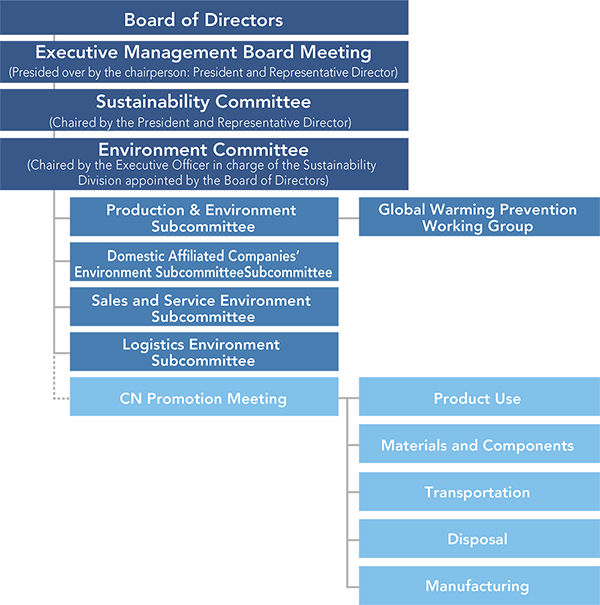
Through the Environment Committee, SUBARU discusses medium- and long-term targets for mitigating climate change and evaluates the progress of its initiatives. For details on the SUBARU Group’s management system for addressing climate change, please refer to the link.
Strategy
To contribute to realizing a decarbonized society, the SUBARU Group has set 2050 as the target year for achieving its long-term goals for products (Scope 3) and plants and offices (Scope 1 and 2), while flexibly reviewing its medium-term goals (milestones) in response to changes in the business environment.
For products (Scope 3), given rising demand for HEVs, the reevaluation of internal combustion engine (ICE) vehicles, and uncertainty surrounding the pace of electrification and regulatory trends in various countries, SUBARU expects to achieve a 50% BEV share of total global sales beyond 2030. To respond to this highly uncertain environment, SUBARU will advance Monozukuri Innovation through BEV development and enhance flexibility and efficiency in development and production, enabling expansion across diverse powertrains and segments. In the future, SUBARU will significantly expand its product lineup by combining BEVs, HEVs, and ICE vehicles to meet diverse market and customer needs.
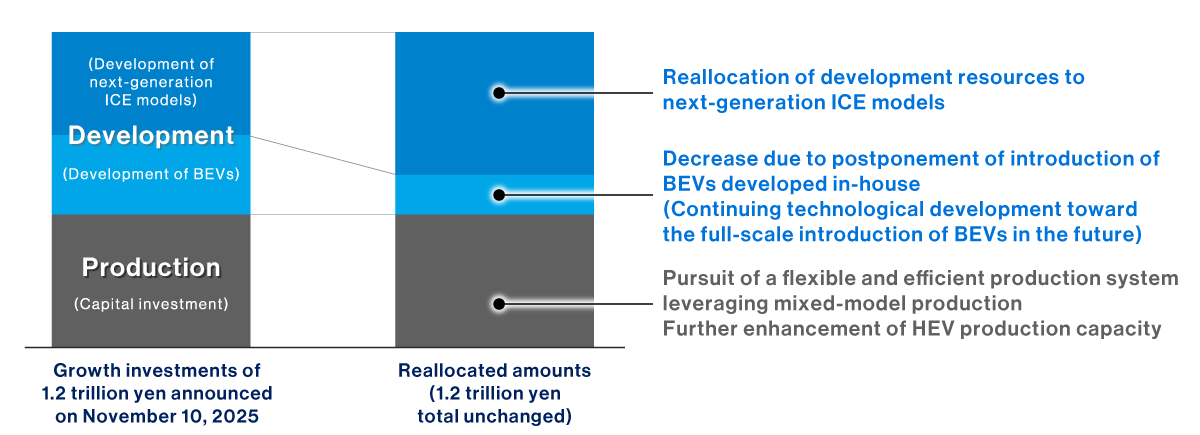
To implement these strategies, SUBARU will maintain total growth investment of 1.2 trillion yen while flexibly reallocating investment across areas, continue research and development of both BEVs and next-generation ICE vehicles, and improve development efficiency by leveraging technologies and expertise cultivated through Monozukuri Innovation, thereby balancing lower investment burdens with sustainable growth.
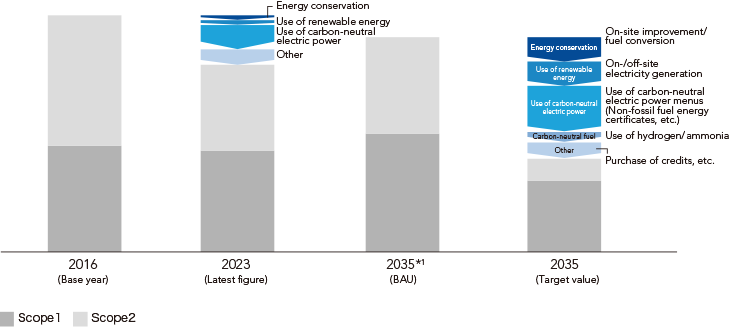
At plants and offices (Scope 1 and 2), SUBARU will promote decarbonization by both improving manufacturing efficiency and converting energy sources. Specifically, while taking into account the characteristics of BEVs and internal combustion engine vehicles, SUBARU will pursue integrated development and production efficiencies and promote mixed-model production. It will also systematically advance initiatives to achieve its target of reducing Scope 1 and 2 emissions by 60% compared with FYE March 2017 levels by FYE March 2036 (total volume basis) through initiatives such as energy conservation measures and the use of renewable energy, potentially including the use of hydrogen.
Review of Growth Investments
Identified Climate-related Risks and Opportunities
SUBARU defines and identifies risks and opportunities associated with climate change to achieve sustainable business activities.
Climate change risks currently identified include inadequate progress in initiatives to address climate change and delays in procurement, production, and distribution due to abnormal weather. Furthermore, depending on the impacts and outcomes of transition and physical risks, which are extremely difficult to predict, consequences such as increased R&D expenses and lost sales opportunities due to reduced customer satisfaction and damage to brand image could arise, potentially having a material impact on the operating results and financial position of the SUBARU Group.
On the other hand, effective initiatives to address climate change could lead to opportunities to create new markets and employment and also use capital and energy more efficiently.
Identified Climate-related Risks and Opportunities
| Category | Anticipated Business Impacts | ||
|---|---|---|---|
| Transition risk | Regulatory | Business management in general | Revisions to climate change targets in various countries could significantly impact our overall business. |
| Products | Failure to meet fuel economy regulations in various countries could result in additional costs or losses due to legal violations, or limit our opportunities to sell products. | ||
| Production phase | SUBARU could incur rising costs due to fossil fuel use, not only because of geopolitical factors associated with petroleum etc., but also government carbon pricing systems. | ||
| Technologies | Products | To promote electrification, it is crucial to ensure profitability for the entire product cycle. Thus, it is essential to involve SUBARU’s upstream and downstream partners in exerting efforts toward this end. Failure to do this could render the Company unable to meet the profitability goal for the entire product life cycle. | |
| Production phase | If use of renewable energy does not grow as expected, SUBARU could face slower progress in achieving its Scope 1 and 2 emissions reduction goals. | ||
| Markets | Products | At present, it is difficult to make predictions with regard to electrification, which will likely cause a substantial gap with the real state of market needs. In such a situation, SUBARU could incur unnecessary and excessive R&D costs while facing a decline in customer satisfaction, resulting in unexpected losses and reduced sales opportunities as well as hampered advancement of the Company’s electrification efforts. SUBARU views electrification as a steady medium- to long-term trend. In the event of its swift and sweeping penetration of the market at some stage, SUBARU could be unprepared for such a prospect in terms of technology and timely product lineups, and thus suffer from a resultant loss of product sales opportunities. |
|
| Reputation | Business management in general | Failure to implement adequate initiatives to achieve zero-carbon outcomes could have an adverse impact on recruitment and sales due to damage to brand value, and higher cost of capital due to difficulties in raising funds. | |
| Physical risk | Acute | Business management in general | As an impact of climate change, extreme torrential rain will frequently cause floods in various locations, which could pose risks of SUBARU’s operations being affected by disrupted supply of raw materials and submerged factories. |
| Chronic | There is a possibility that SUBARU might suffer from shortages of natural resources used for tires and metal resources for electrification technologies. | ||
| Opportunities | Market opportunity | If SUBARU advances its efforts to make products more environmentally friendly as planned and global climate change mitigation/adaptation efforts progress adequately, the Company will be able to maintain its key markets while at the same time potentially expanding in markets receptive to its offer of “Enjoyment and Peace of Mind.” In addition, through contributing to addressing climate change issues, SUBARU could increase its brand value, thereby enhancing its sales and recruiting ability. This could make it easier for the Company to obtain financing from investors, thereby lowering capital costs. | |
| Energy-related opportunity | Regarding energy use during the production phase, by transitioning to renewable energy while at the same time giving due consideration to cost-effectiveness, SUBARU could overcome the risk of being exposed to price fluctuations involved in energy derived from fossil fuels, thereby preventing future cost increases. | ||
- Note:
- The risks and opportunities described above are based on past facts and currently available information, and may change significantly due to such factors as future economic trends and the business environment facing SUBARU. The opportunities described represent those for SUBARU’s products to contribute to climate change adaptation and do not anticipate climate change-related deterioration.
Examples of Identified Risks and Measures by Scenario
SUBARU is investigating compliance with relevant policies including the fuel efficiency regulations of the countries it serves. We formulate our own scenarios and plans for achieving our medium- to long-term goals based on policy trends and scenario-specific information published by the International Energy Agency and others.
The SUBARU Group explores climate change-related countermeasures in consideration of a variety of scenarios, including its own scenario assuming carbon neutrality by 2050 (equivalent to the 1.5°C scenario), based on policy trends in various countries relating to the regulation of fuel economy and other areas and information published by the International Energy Agency and other organizations. This exploration also incorporates risks and opportunities recognized with respect to sustainable business activities.
For example, SUBARU is considering measures focused on the impact of the transition to electrification on its product strategy, based on scenarios including one in which the percentage of EVs sold in the market increases significantly and another in which the penetration of EVs increases relatively modestly. SUBARU also considers physical aspects, such as impacts on production activities, including a scenario in which measures to address climate change do not progress sufficiently, and conducts necessary monitoring*1 and risk assessments*2 for impacts involving water resources and other factors.
- Mitigating Climate Change: Product Initiatives
- Environmental Data: Water Consumption (By Region and Source)
- *1
- The Production & Environment Subcommittee manages the SUBARU Group’s water consumption, and both the total consumption and consumption intensity are maintained at constant levels.
- *2
- The SUBARU Group uses a third-party expert to implement water risk assessments to ensure the sustainable use of water. In FYE March 2024, we conducted an in-house water risk assessment using the World Resources Institute (WRI) Aqueduct Water Risk Atlas and WWF-DEG Water Risk Filter, confirming that water risk is generally below moderate, consistent with past surveys.
| Scenario | Example scenario risks of particular importance | Measures considering risks and opportunities | |
|---|---|---|---|
| Penetration of electrification | Products |
|
Risk of market need diverging from electrification technology |
| Increasing severity of natural disasters | Business management | Risk of operations being affected by disrupted supply of raw materials and submerged factories as a result of frequent flooding in various locations from extreme torrential rain |
|
Risk Management
To address climate change-related transition risks in policy and regulation, technology, markets, and other items, dedicated departments at SUBARU gather information from a wide range of sources and work to identify uncertain climate change-related risks from future projections. These transition risks are proposed and discussed during the Executive Meeting, and particularly significant matters are subject to deliberation within the Board of Directors before decisions are made.
The physical risks associated with climate change include flooding and other natural disasters. The Governance Risk Management Department*1 plays a pivotal role in establishing regulations in response to these operational risks as part of the BCP system. During emergencies, the department centrally grasps Group-wide information, establishing a system to manage Group-wide response.
- *1
- As the importance of risk management, compliance, internal controls, and Group governance continues to grow, we have integrated the Risk Management and Compliance Office and the governance promotion functions within the Secretarial Office to manage these areas in a cross-functional and integrated manner and to further strengthen their alignment with management. This integration led to the establishment of the new Governance Risk Management Department in June 2026.
Targets and Results
In order to contribute to a decarbonized society, SUBARU has set long-term goals (long-term vision) for 2050 and medium-term goals (milestones) regarding products (Scope 3) and plants and offices (Scope 1 and 2). These medium-term goals are reviewed as necessary according to the business environment.
| Category | Target Year | Goal |
|---|---|---|
| Products (Scope 3) |
2050 | Reduce average well-to-wheel CO2 emissions from new vehicles (in operation) by 90% or more compared to 2010 levels |
| Early 2030s | Apply electrification technologies to all SUBARU vehicles produced and sold worldwide | |
| Beyond 2030 | Aim for 50% of global sales to be BEVs | |
| Plants and offices (Scope 1 and 2) |
FYE March 2051 | Achieve carbon neutrality |
| FYE March 2036 | Reduce CO2 emissions by 60% compared with FYE March 2017 (total volume basis) |
Key Achievements
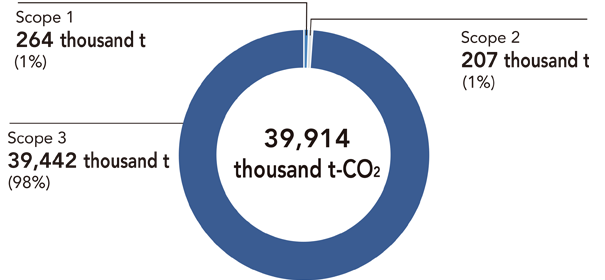
For FYE March 2026, the SUBARU Group has reported a total of 35,900 thousand t-CO2 (total of Scope 1, 2, and 3). Of this total, Scope 3 accounted for 98.5%, with emissions from the use of sold products making up the majority.
In terms of product results, EVs accounted for 16.6% of global sales in FYE March 2026. Battery electric vehicles (BEVs) accounted for 1.7%.
Meanwhile, Scope 1 and 2 emissions in FYE March 2026 were 550 thousand t-CO2 based on market standards, achieving a 20% reduction from FYE March 2017. In recent years, the SUBARU Group has accelerated the adoption of renewable energy, which now accounts for 12.3% of the Group’s total energy use and 25.7% of its electricity use.
Breakdown of CO2 Emissions in FYE March 2026
- Environmental Data: CO2 Emissions: Total of Scope 1, 2, and 3
- Environmental Data: CO2 Emissions: Scope 1 (Direct Emissions) and Scope 2 (Indirect Emissions from Energy Sources)
- Environmental Data: CO2 Emissions: Scope 3 (Other Indirect Emissions)
- Note:
- Scope 1: Direct emissions of greenhouse gases from a company’s own facilities
Scope 2: Indirect emissions of greenhouse gases from the use of purchased or acquired electricity, heat, and/or steam supplied by another company
Scope 3: All indirect emissions other than Scope 1 and 2 emissions, including those arising from the procurement of raw materials, transport, product use, and the disposal process, as well as arising from employee commuting, business travel, etc.
Initiatives
Product Initiatives
SUBARU recognizes that, amid a rapidly changing market environment, it is important to respond flexibly and quickly across BEVs, HEVs, and internal combustion engine (ICE) vehicles, given the uncertainty surrounding the pace of electrification and regulatory trends. Based on this recognition, SUBARU is advancing Monozukuri Innovation initiatives to enhance flexibility and efficiency in development and production.
As part of its Monozukuri Innovation initiatives, SUBARU is advancing its electrical and electronic (E/E) architecture centered on an integrated electronic control unit (ECU) and standardizing and expanding vehicle platforms to improve development efficiency and flexibility in product deployment. This enables SUBARU to efficiently develop products combining different powertrains and offer a product lineup that meets diverse needs.
SUBARU also recognizes that using a diverse range of technologies is essential to achieving carbon neutrality. Accordingly, it is working to reduce CO2 emissions across the entire life cycle, provide customers and society with choices unique to SUBARU, and promote the use of low-carbon fuels.
Reducing CO2 Emissions Across the Entire Life Cycle
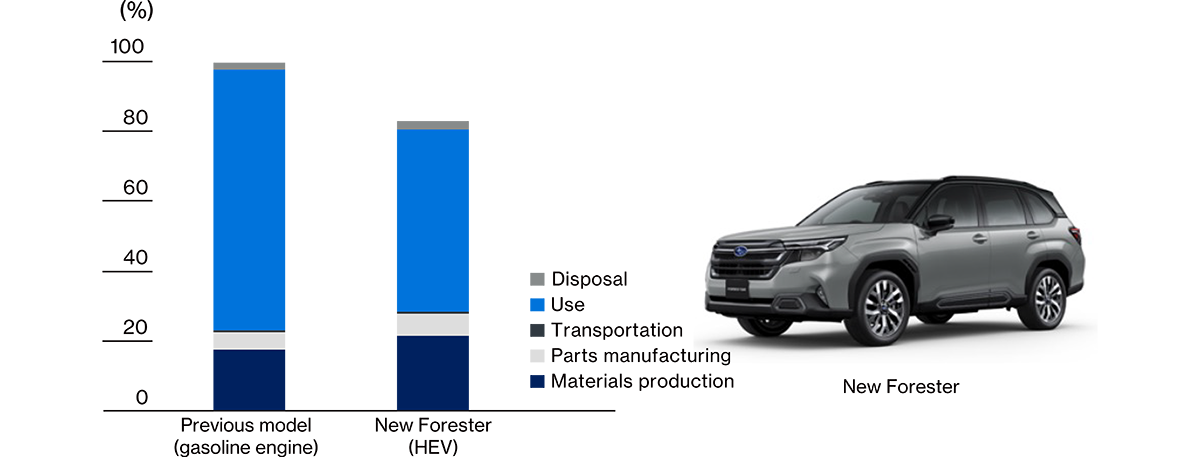
SUBARU aims to achieve a decarbonized society by reducing CO2 emissions throughout the entire life cycle, from material production to disposal, rather than just CO2 emissions from products in operation.
Based on this approach, SUBARU conducts LCA*1 to evaluate CO2 emissions over the entire life cycle of automobiles. We quantify the environmental impact of automobiles and proactively develop automobiles taking into account the need for decarbonization from the design stage. For example, the Levorg Layback, equipped with our strong hybrid system, has achieved an approximately 20% reduction in CO2 emissions across its entire life cycle compared with its gasoline-engine counterpart.
- *1
- Life-cycle assessment (LCA) is an environmental impact assessment method that comprehensively evaluates environmental impacts at every stage of the life cycle of products and services from raw material procurement to manufacturing, transportation, product use, and disposal
Comparison of CO2 Emissions Composition Across the Entire Life Cycle
- *2
- Models equipped with our strong hybrid system
Promoting the Popularization of Electric Vehicles
In response to progress in electrification and changes in the market environment, SUBARU is expanding its product lineup through the development and launch of BEVs and HEVs.
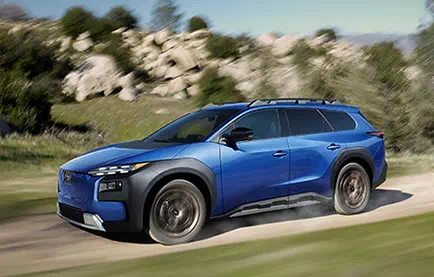
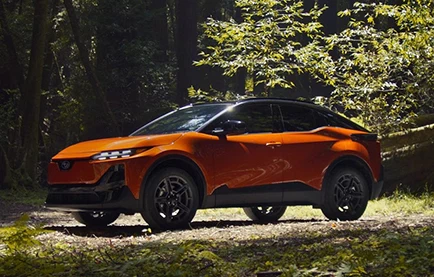
For BEVs, SUBARU launched the Solterra, its first global BEV, in May 2022. This model utilizes the e-SUBARU Global Platform, a dedicated EV platform jointly developed with Toyota Motor Corporation (“Toyota”), combining SUBARU’s AWD technology with Toyota's electrification technology to improve development investment efficiency and product appeal.
SUBARU has continued to develop BEVs in collaboration with Toyota and is expanding its lineup with models including the Trailseeker and Getaway. These initiatives enable SUBARU to bring BEVs to market while curbing development investment and expanding customer choice. Furthermore, in addition to evaluating the products themselves, SUBARU is accumulating technologies and expertise for use in future product development.
For HEVs, SUBARU is developing and rolling out the Next-generation e-BOXER, which incorporates THS*3 technology. This system has evolved from a conventional parallel configuration to a series-parallel configuration. Optimizing the placement of the power control unit also ensures strong fuel tank capacity, delivering competitive fuel economy and cruising range. Since 2024, this system has been installed in the Crosstrek and Forester and offered in the Japanese and North American markets.
- *3
- THS: TOYOTA Hybrid System
Advancing Engine Technologies
We will continue to meet demand for conventional gasoline-powered vehicles from customers. HEVs, which we are expanding to include more models, are made by combining gasoline engines with electrification technology, and engines need further technological improvements to boost fuel efficiency. The 1.8-liter BOXER DIT*4 combines the unique driving pleasure of a SUBARU with outstanding environmental performance. Installed in the Levorg, Forester, and Layback models, it is a New-generation BOXER engine with a turbo system that generates high torque at low RPM. Its lean combustion technology produces more energy with less fuel. Combined with the expanded Lineartronic shift range, this engine offers even more powerful acceleration off the line and superb fuel efficiency when cruising at high speed.
In addition, SUBARU, along with Toyota Motor Corporation and Mazda Motor Corporation, have each committed to developing new engines tailored to the era of electrification. With its new engines, SUBARU aims to retain the value of its distinctive horizontally-opposed engine and symmetrical AWD while focusing on a next-generation hybrid system integrated with electrification, balancing environmental and driving performance, and supporting a variety of carbon-neutral fuels*5.
- *4
- DIT: Direct injection turbo
- *5
- Fuels with net zero CO2 emissions into the atmosphere across their lifecycle, from manufacture to use. These include e-fuel, made from hydrogen and carbon dioxide, and biofuels derived from biomass (plants, etc.)
Initiatives for the Popularization of Low-Carbon Fuel*6
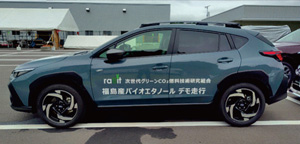
SUBARU is working to utilize low-carbon fuels such as bioethanol, which is attracting attention as a fuel derived from renewable energy sources. In order to diversify automotive fuels and realize a carbon neutral society, all gasoline vehicles sold by SUBARU worldwide are now fully and reliably functional with E10 fuel (E3 fuel in Japan). In addition, in cooperation with the Ministry of Economy, Trade and Industry, SUBARU has been discussing the early introduction of highly concentrated bioethanol (up to E20 fuel) and synthetic fuels, and we are also working to address low-carbon fuels from a technological standpoint.
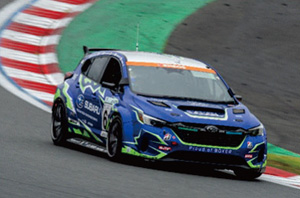
Furthermore, SUBARU is conducting demonstration activities through motorsports to verify performance under real-world driving conditions. Since 2022, SUBARU has participated in the Super Taikyu Series and conducted technical verification using vehicles powered by synthetic fuel. At the 2025 Fuji 24 Hours Race, SUBARU used low-carbon gasoline (E20) supplied by ENEOS and accumulated knowledge about fuel performance and vehicle compatibility under demanding conditions.
In the fuel production process, SUBARU is participating with other companies in the Research Association of Biomass Innovation for Next Generation Automobile Fuels (raBit) and advancing research into bioethanol fuel production technologies.
These initiatives go beyond verifying the practicality of low-carbon fuels. Through engineer-led development and hands-on activities, they also enhance development capabilities and foster human resources. SUBARU will continue adapting its technologies to low-carbon fuels, thereby helping reduce CO2 emissions from ICE vehicles and achieve sustainable mobility.
- *6
- Low-carbon fuel: Refers to bioethanol fuel and synthetic fuel (e-fuel). For example, E10 fuel is ordinary gasoline mixed with 10% bioethanol
Site Initiatives
To achieve its medium-term goal for FYE March 2036, the SUBARU Group will combine a range of measures centered on promoting energy conservation, introducing renewable energy, and converting fuels to reduce Scope 1 and 2 emissions.
In addition, SUBARU has endorsed the GX League Basic Concept announced by Japan’s Ministry of Economy, Trade and Industry and has participated in the GX League since FYE March 2025 and in the GX Future League since FYE March 2027.

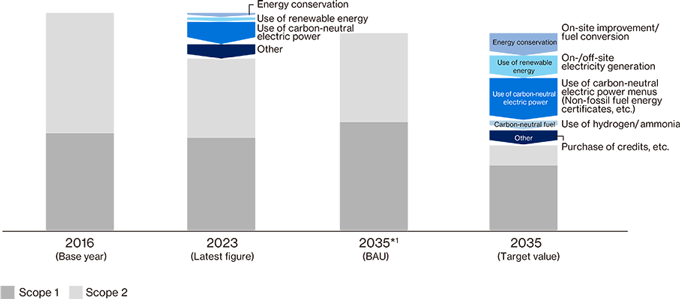
Illustration of Scope 1 and 2 Emission Reduction Measures and Reduction Effects up to 2035
- *1
- Assuming the electricity emission coefficient in Japan decreases to 0.25 t-CO2 per thousand kWh
Promotion of Energy Conservation Measures
At its business sites and consolidated subsidiaries in Japan and overseas, the SUBARU Group promotes energy conservation measures to reduce greenhouse gas emissions and improve energy efficiency.
In addition to working to upgrade equipment by introducing cogeneration systems and high-efficiency equipment, the SUBARU Group is conducting demonstration tests using external facilities with a view to future hydrogen use to identify specific issues.
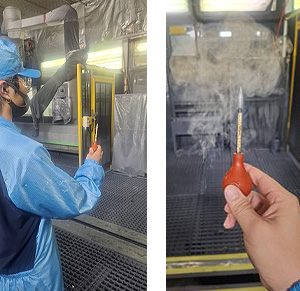
As an energy conservation measure in its production processes, in FYE March 2026, SUBARU focused on the energy-intensive painting process and reduced the energy used to supply and exhaust air in paint booths. Paint booth ventilation continues to operate during maintenance to prevent foreign matter and heat from entering from outside the booth and paint mist from dispersing during painting. Through repeated studies of airflow patterns and air velocity, SUBARU reduced the air supply and exhaust frequency during certain maintenance periods by introducing an energy-saving operating mode. SUBARU also reduced the air supply and exhaust frequency in booths where the introduction of 3D spray guns and other measures had suppressed paint mist generation by repeatedly conducting similar studies. These measures have reduced CO2 emissions by approximately 450 tons in total.
Furthermore, SUBARU introduced internal carbon pricing in FYE March 2023 as a mechanism for ensuring that energy conservation and CO2 reduction initiatives are reflected in investment decisions. In the internal consultative plan on capital expenditures at business sites, the monetary value of the CO2 reduction accompanying the introduction of the relevant facilities is set at 6,000 yen/t-CO2. By accounting for CO2 reduction impact in terms of its cost reduction impact, we ensure its inclusion as a factor in assessing capital expenditures.
SUBARU is also implementing office measures such as switching to LED lighting and adopting heat-shielding and insulating building materials. Subaru of America, Inc. (SOA)’s headquarters and National Service Training Center have acquired LEED Silver certification,*2 which is higher than standard certification. These facilities improve energy-use efficiency through automation and comprehensive air conditioning systems.
- *2
- Leadership in Energy and Environmental Design (LEED) is a green building certification system developed and administered by the U.S. Green Building Council. It provides objective environmental performance data on buildings through evaluation of energy conservation and environmental impact reduction abilities for a range of project stages from overall planning and design to construction, management, and maintenance. Acquisition of the certification is becoming popular in the U.S. and in other countries
Use of Renewable Energy
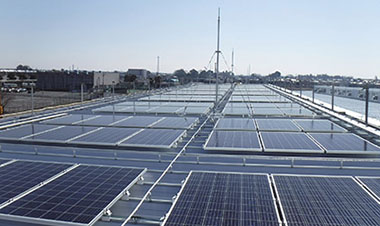
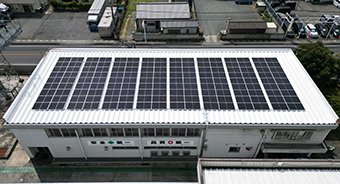
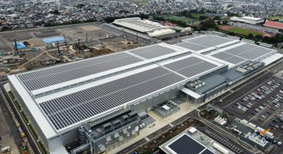
The SUBARU Group is proactively promoting the installation of solar power generation facilities. At our various facilities, including the Gunma Plant, Tokyo Office, and Utsunomiya Plant, we have achieved significant reductions in CO2 emissions by incorporating equipment plans into new buildings from the design stage and installing equipment on the roofs of existing buildings.
In conjunction with construction of the new Oizumi Plant, SUBARU is promoting the installation of rooftop solar power generation facilities at the new buildings. These facilities include a 6.4 MW system, the largest installed on SUBARU premises, which began operation in December 2025. The system, installed on the roof of the new press and body building, is expected to generate approximately 8,000 MWh annually. In FYE March 2026, new equipment also began operating at the new cafeteria building at the Oizumi Plant and the South Plant of the Utsunomiya Plant, steadily increasing the amount of electricity derived from renewable energy.
In addition, SUBARU began procuring solar-generated electricity through off-site corporate PPAs*3 in February 2025, and added 5.2 MW of capacity in February 2026. The total amount of electricity procured under off-site corporate PPAs is approximately 10.2 GWh (installed capacity: 9.3 MW), and annual CO2 reductions total approximately 3,800 tons.
As of FYE March 2026, the SUBARU Group has installed approximately 27.6 MW of solar power generation facilities, including off-site corporate PPAs, and uses approximately 12,000 MWh of the electricity generated from these facilities in-house.
- *3
- Off-site corporate power purchase agreement (PPA): a long-term contract for renewable electricity generated at the facilities of a power producer to be supplied to a consumer via a retail electricity provider
Purchase of Carbon-Neutral Electricity
The SUBARU Group is actively working to purchase carbon-neutral electricity. All of the electricity purchased at the six SUBARU facilities of Gunma Main Plant, Utsunomiya South Plant and 2nd South Plant, the Handa West Plant (including Yusoki Kogyo K.K.), the Isesaki Plant, and the Ebisu Subaru Building, and at the two consolidated companies in Japan of Subaru Finance Co., Ltd. and Kiryu Kogyo Co., Ltd. is carbon-neutral electric power.
At the Utsunomiya Plant, we have introduced the Tochigi Furusato Denki program*4, which utilizes hydroelectric power generated by Tochigi Prefecture, and at the Gunma Plant, we have introduced hydroelectric power via a local production for local consumption PPA (Gunma Model) provided by the Gunma Public Enterprise Bureau, among other efforts to both reduce environmental impact and contribute to local communities.
- *4
- Electricity service program co-hosted by the Tochigi Public Enterprise Bureau and TEPCO Energy Partner, Inc. Supplies electricity generated by eight hydroelectric power stations run by the Tochigi prefectural government. Hydropower users can claim to be emitting no CO2 from using the electricity, on the grounds of its CO2-free generation process
Participation in Emissions Trading Systems
As businesses operating in the jurisdictions of the Tokyo metropolitan and Saitama prefectural governments, our Tokyo Office, Kitamoto Plant, and Stellar Town Omiya are covered by the Tokyo Metropolitan Environmental Security Ordinance, which promotes greenhouse gas reduction and emissions trading for large businesses, and the Saitama Prefecture regulation on target-based emissions trading. Our business sites are responding through compliance with the relevant emissions trading systems.
Dealership Initiatives
Reducing Energy Consumption Through Store Design
SUBARU dealerships consider energy-saving measures and environmental considerations important when designing their storefronts.
From the storefront design stage, plans incorporate heat-shielding and insulation performance and energy efficiency, helping curb energy consumption by reducing air conditioning loads. Air conditioning and lighting equipment is also planned according to how each space is used, with an emphasis on balancing comfort and energy conservation. SUBARU also seeks to ensure that dealerships can be used efficiently over the long term by reviewing building size, selecting specifications and materials, and conducting inspections and maintenance after construction.
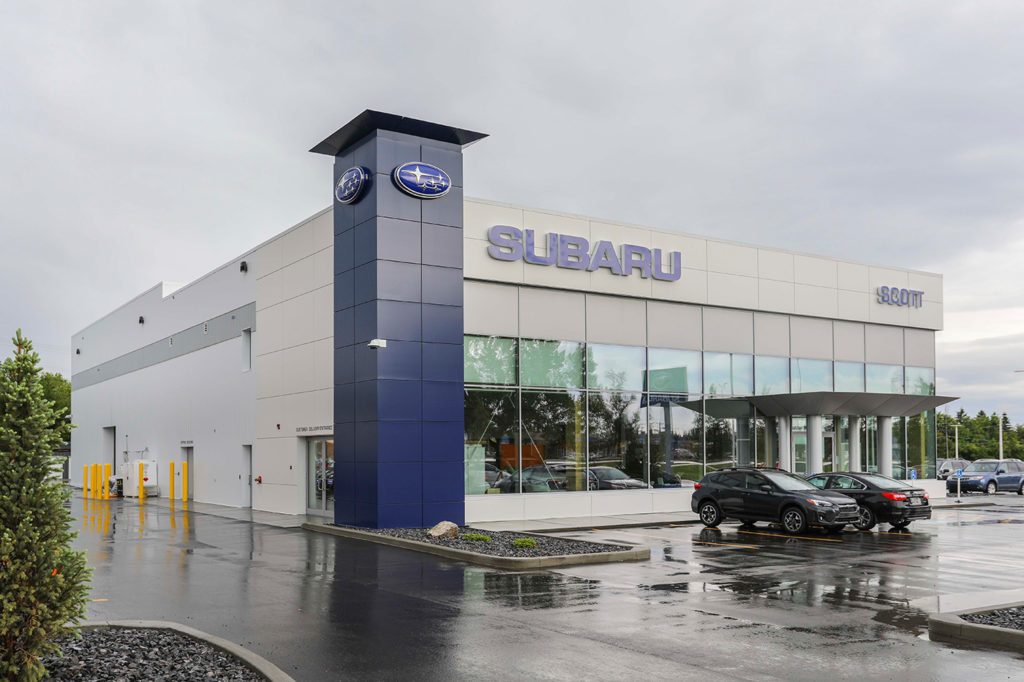
Overseas, Scott Subaru, a retailer for Subaru Canada, Inc. (SCI), has received certification as a “passive house,” or energy-efficient building, for its highly insulated building design, which minimizes the need for heating and cooling equipment. Through initiatives in Japan and overseas, SUBARU is developing dealerships that balance environmental considerations with comfort.
Purchase of Carbon-Neutral Electricity
Dealerships in Japan have been converting to CO2-free electricity (carbon-neutral power plans) to achieve carbon neutrality. By FYE March 2026, consolidated dealerships had completed conversion to 100% electricity use from CO2-free electricity and achieved ahead of schedule the target of a 60% reduction in CO2 emissions compared with FYE March 2017.
- Note:
- Excluding some facilities where conversion is physically difficult due to tenant use or restrictions on available power plans
Expansion of Fast-Charger Network
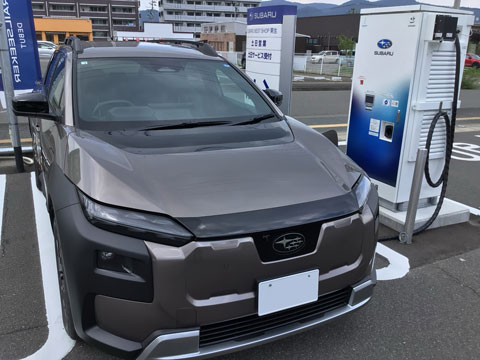
SUBARU is expanding the installation of fast chargers to promote the further adoption of EVs. As of March 2026, 16 chargers had been installed, with a target of 50 nationwide by FYE March 2028. SUBARU is also focusing on training BEV Life Designers who can clearly explain the characteristics and value of EVs, enabling them to recommend EVs tailored to each customer.
Logistics Initiatives
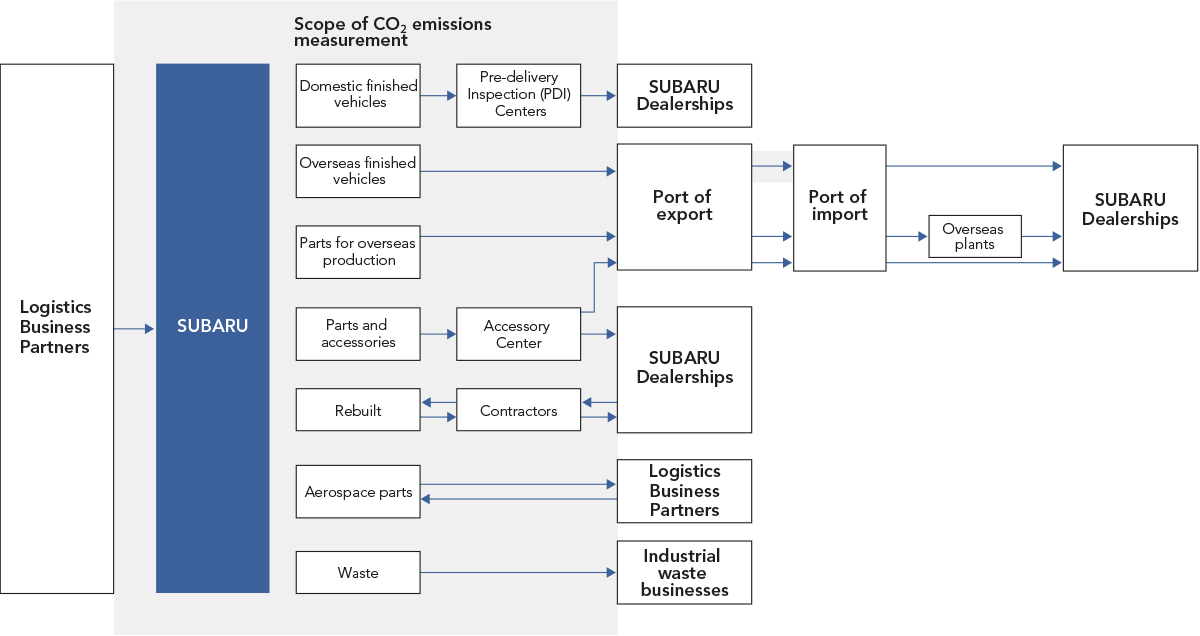
SUBARU works across the Group with logistics companies, dealerships, and other automotive industry players to improve transport efficiency for each logistics category. These include finished vehicles, parts used for production at overseas plants (parts for overseas production), and parts and supplies used at dealerships and maintenance sites. SUBARU is also working to reduce CO2 emissions from logistics operations by 1% each year.
SUBARU believes that strengthening its supply chain will lead to achieving carbon neutrality by 2050, and we will continue efforts to increase the accuracy of CO2 emissions calculations and expanding their calculation scope, in addition to our reduction activities.
These initiatives are being implemented throughout the SUBARU Group, including in Japan and at overseas sites, particularly in North America, to reduce environmental impact globally by optimizing transportation methods and switching fuels.
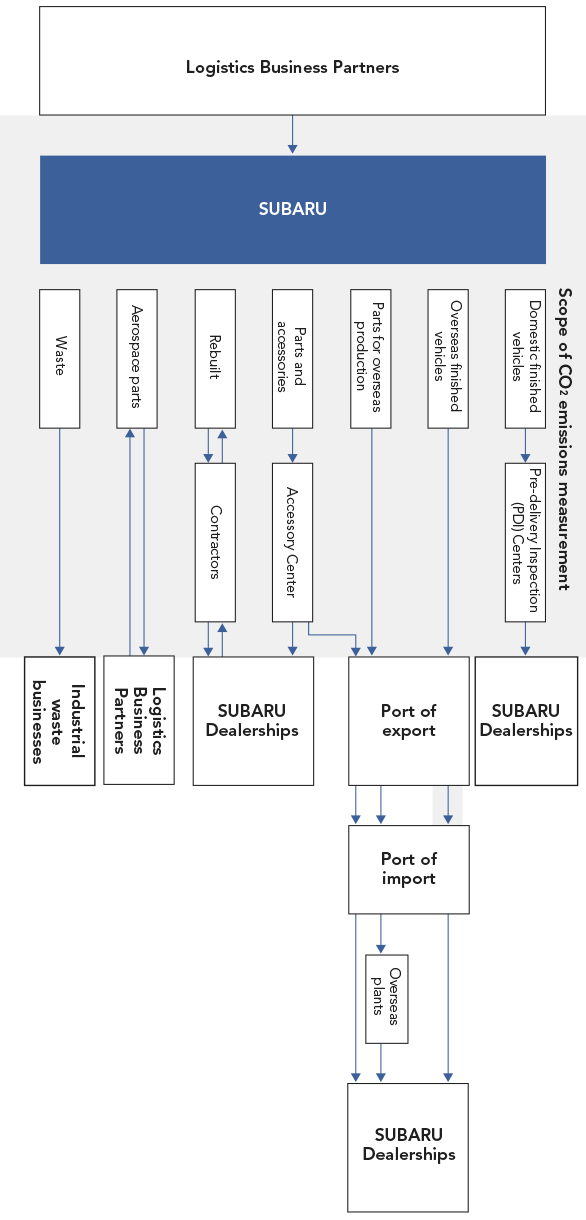
Scope of CO2 Emissions Managed and Monitored by SUBARU
Transport of Finished Vehicles
The SUBARU Group is establishing optimal standard routes for finished vehicles, flexibly accommodating shipping of a wide range of vehicle types and sizes (particularly large cars), promoting joint transportation of alliance vehicles, and improving loading efficiency. We are also considering modal shift*1 as a means of reducing environmental impact. We request that our logistics partners help to minimize the environmental impact of their finished vehicle transport operations, taking actions such as practicing eco-conscious driving by installing digital tachographs*2 and dash cams, as well as improving fuel efficiency by fitting aerodynamic panels and other devices.
In addition, as part of our modal shift initiatives, for finished vehicle transportation from Kyushu to Hokkaido, we conducted a trial incorporating rail transportation in place of conventional transportation centered on coastal shipping and trucks. The trial results confirmed a high level of transportation quality, but we also identified cost-related issues. Based on these findings, we will work to identify issues that need to be addressed for implementation, including route selection.
SOA is expanding its use of rail transportation and uses LNG-fueled vessels for marine transportation to dealerships in Alaska. This reduced CO2 emissions by approximately 25%, NOx emissions by 95%, and SOx emissions by 100%.
- *1
- For cargo transportation, switching transportation modes from trucks to those imposing less environmental burden, such as railway and seaborne systems
- *2
- Fitted to a vehicle as a tool for driving management in commercial vehicle operation to automatically record its journey information, including driving time and speed, and store the information in the installed recording medium, such as a memory card. As the system can present clear data of recorded events, including sudden acceleration and deceleration, fuel-wasting engine idling, and dangerous driving, it is expected to help drivers increase their awareness of safe driving and fuel economy
Conventional Route and Trial Route Using Rail
Export of Parts
In the transport of parts for overseas production, we are making efforts to improve the container fill rate through measures such as improving packing modes, introducing new packaging containers, and optimizing loading plans. In FYE March 2026, though shipment volume increased due to an increase in the number of vehicles shipped and the start of Forester production in the United States, we maintained a high container fill rate at 98%. In addition, to further improve transport efficiency, we are also promoting the round use*3 of our own import containers, the use of inland container depots*4, and the reuse of import containers previously used by other companies. Through these initiatives, we will continue to contribute to reducing environmental impact by both improving transport efficiency and reducing CO2 emissions. In addition, with a view to future CO2 reductions, we have begun trial initiatives to reduce CO2 emissions by transitioning to vessels that use low-carbon fuels.
- *3
- Using import containers for export instead of returning them empty to port, thereby reducing the transport of empty containers from ports
- *4
- Depot located inland for consolidation of container cargo
Transportation and Management of Parts and Accessories
To resolve complexities and inefficiencies in parts of our transport system, SUBARU began joint distribution of maintenance parts with Toyota Mobility Parts Co., Ltd. in FYE March 2021. As of the end of FYE March 2026, we had started joint distribution to nine dealerships (27 retail locations and external business partners in various regions). We aim to work toward joint distribution in other regions going forward.
By switching to joint distribution, we have in the case of some dealerships achieved a reduction of lead time by one day and a cut in transport costs of approximately 25%.
We are also working in collaboration with partner transportation companies to optimize transportation routes. In FYE March 2026, we reviewed routes in the Tokai and Hokuriku regions, achieving a 14% reduction (approximately 360 km) in daily transportation distance and limiting additional transportation runs. Going forward, we will continue to promote expansion into other regions.
Furthermore, the Parts Distribution Center in Gunma is using forklift operating data (hour-meter readings) to improve overall utilization rates by reducing the number of underutilized forklifts. As a result, we reduced the number of forklifts by a total of 40, comprising 12 LPG-powered forklifts and 28 battery-powered forklifts. We will continue to improve operational efficiency going forward.
Collaboration with Suppliers
SUBARU has set out a code of conduct that requires supplier selection and management mechanisms relating to climate change issues, and shares the code with our suppliers, asking them to take appropriate actions when providing orientation sessions. Furthermore, by encouraging suppliers to obtain ISO 14001 certification, we are working to prevent environmental accidents and mismanagement events in the supply chain and reduce the risk of infringement of environmental laws and regulations.
We are also promoting initiatives in collaboration with suppliers to decarbonize the supply chain. At Procurement Policy Briefings, we request cooperation on decarbonization and continuously share reduction targets. Each year, we receive actual CO2 emissions reports from nearly 300 suppliers and ask them to submit roadmaps for achieving carbon neutrality. As a result, a 49% reduction in CO2 emissions is expected by FYE March 2036 compared with FYE March 2017.
We also interview selected suppliers to identify their specific initiatives and challenges, and strengthen collaboration through dialogue that includes their requests to SUBARU. Furthermore, in FYE March 2026, we are reviewing the progress of major suppliers and supporting 20 nearby suppliers that are highly dependent on SUBARU through site visits, exchanges of views, and advice.
In addition, for suppliers near the Gunma Plant, we assessed the risk of water-related disasters at more than 1,200 sites, including Tier 2 sites. We share the assessment results with suppliers and use a sheet for checking BCP initiative status to review contingency actions, conduct mock drills, and follow up on subsequent corrective measures.