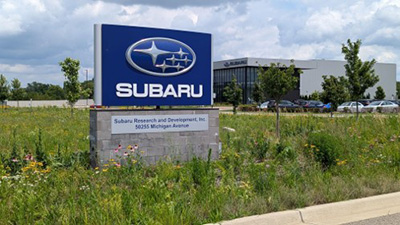
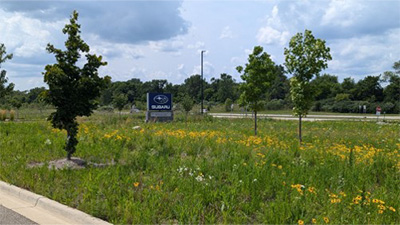
Coexistence with Nature
Our Approach
SUBARU regards “coexistence with nature” as a particularly important theme, as its Environmental Philosophy underlying the SUBARU Environmental Policies calls for us to “focus on efforts aimed at coexistence with nature.”
Furthermore, the SUBARU Group instituted the SUBARU Guidelines on Biodiversity in April 2019, which serve as the basis for its approach to biodiversity. The guidelines were formulated with reference to the government’s Guidelines for Private Sector Engagement in Biodiversity (Ministry of the Environment) and the Declaration of Biodiversity by Keidanren: Guide to Action Policy, as well as by taking into account international trends in biodiversity management, in order to ensure that the effectiveness and continuity of initiatives can be guaranteed.
SUBARU Guidelines on Biodiversity
Our society is supported by biodiversity, which is the source of various blessings from nature.
On the other hand, “biodiversity” is rapidly being lost on a global scale.
We promote biodiversity preservation through our business activities and contribute to the environmental protection of our planet while aiming to coexist with the earth, the sky and nature.
- We grasp the impact of business activities on biodiversity and reduce their impact. We also promote initiatives leading to further recovery.
- We strive to raise awareness of biodiversity.
- We respect international rules concerning biodiversity.
- We cooperate with stakeholders and strive for preservation of biodiversity.
- We proactively disclose information on activities regarding biodiversity.
Established in April 2019
Management System
Through the Environment Committee, SUBARU discusses medium- and long-term targets for achieving coexistence with nature and evaluates the progress of its initiatives. For details on the SUBARU Group’s management system, please see the following link.
Targets and Results
To achieve coexistence with nature, the SUBARU Group has set the following targets: properly manage impact on the natural environment at business sites (air, water quality, noise, vibration, and odor), and expand protected areas to reduce impact on the natural environment caused by business activities.
Key Achievements
To minimize the environmental impact of its business activities, SUBARU gives top priority to compliance with environmental laws and regulations and continues working at each site to prevent and properly manage environmental risks. In FYE March 2026, no serious violations of environmental laws and regulations subject to penalties such as fines occurred.
In addition, aiming for coexistence with nature, SUBARU is promoting the expansion of protected areas, particularly in regions where it conducts business. In Bifuka Town, Nakagawa District, Hokkaido, where the SUBARU Test & Development Center Bifuka Proving Ground is located, SUBARU works with the town on initiatives such as the effective use of forest resources. Together with the town-owned forest, the forest within the Bifuka Proving Ground has been certified under the international SGEC-FM,*1 forest certification system, since FYE March 2020.
SUBARU has also established the Landscaping Guidelines to ensure that its planting activities do not adversely affect local biodiversity. In addition to procedures for formulating planting lists, the Landscaping Guidelines require compliance with the Ministry of the Environment’s three principles for preventing damage by invasive alien species: “do not introduce, release, or spread.” A total of three sites—the Oizumi and Kitamoto Plants at the Gunma Plant and the Main Plant at the Utsunomiya Plant—select native species for on-site planting in accordance with these guidelines. Furthermore, even before these guidelines were established, the Tokyo Office had created a biodiversity area on its premises where species native to the Musashino area are planted and maintained.
Going forward, SUBARU will ensure thorough compliance with environmental laws and strengthen risk management while reducing environmental burden and promoting coexistence with nature through its business activities.
- *1
- Forest Management Certification by the Sustainable Green Ecosystem Council (SGEC)
Initiatives
Proper Management of Environmental Impact
To minimize the impact of its business activities on the natural environment, SUBARU manages air, water quality, noise and vibration, offensive odors, and other factors to prevent environmental risks and minimize their impacts.
To comply with environmental laws and regulations, SUBARU works to prevent incidents by setting voluntary standards stricter than statutory limits. SUBARU is also strengthening environmental management by surveying equipment conditions associated with various environmental impacts and taking measures such as introducing measuring instruments and upgrading equipment. If an environmental accident occurs, SUBARU works to reduce environmental risks through cause analysis and thorough measures to prevent recurrence.
Major Environmental Impacts and Management Initiatives
| Air (VOCs, NOx, and SOx) |
|
| Water Quality | SUBARU conducts regular water quality surveys and monitoring and appropriately submits legally required notifications and performs necessary surveys. Each site manages water discharge according to its location and process characteristics, including properly treating process wastewater before discharge and confirming the water quality of stormwater and cooling water before discharge. |
| Noise, Vibration, and Offensive Odors | SUBARU conducts regular inspections in its efforts to reduce impacts on the surrounding environment through measures such as improving production equipment. |
Initiatives at Each Site for Coexistence with Nature
SUBARU Test & Development Center Bifuka Proving Ground
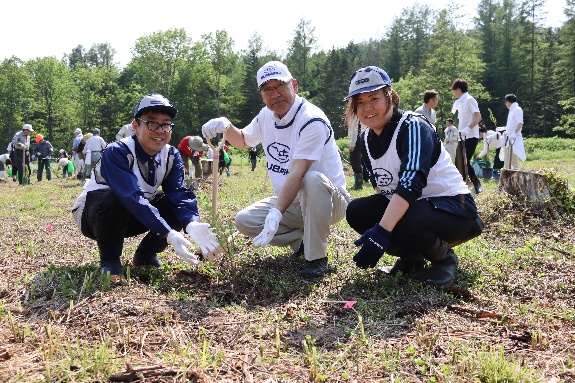
Since FYE March 2018, SUBARU has undertaken forest management and conservation activities, including tree planting, thinning, and nature conservation, in approximately 115 hectares of forest located on the proving ground premises. Aiming to conduct forest management and conservation activities in collaboration with Bifuka Town and other members of the local community, SUBARU has a long-term plan to create a forest through artificial afforestation over 50 years. Wood generated through thinning is also used as biomass fuel and for other purposes. In FYE March 2019, SUBARU concluded an agreement on the implementation of forest conservation activities with Bifuka Town to further promote activities in collaboration with the local community. As part of these activities, SUBARU sponsors an annual tree-planting ceremony.
In consideration of climate change measures, SUBARU has also purchased J-Credits (BIFUKA AIR Bifuka Town Forecast Credits) generated through the town's forest conservation activities since FYE March 2022. In FYE March 2025, we conducted a literature review of wild animals and plants that are likely to inhabit or grow in the surrounding area, and identified approximately 1,280 species.
In February 2019, SUBARU concluded a partnership agreement with Bifuka Town and the Hokkaido Government Kamikawa General Subprefectural Bureau. Through donations under the corporate hometown tax donation program, it supports conservation activities at Matsuyama Marsh, adjacent to the Bifuka Proving Ground. Because the marsh provides habitat for diverse flora and fauna, SUBARU is advancing initiatives to conserve this rich forest environment.

Gunma Plant
At the Gunma Plant, species for planting at the Oizumi and Kitamoto Plants are selected and managed in accordance with the Landscaping Guidelines.
In FYE March 2025, SUBARU also conducted an ecological survey of the reservoir area and ditches on the Oizumi Plant premises. The survey confirmed that wetland and waterside environments are maintained year-round and identified approximately 580 species in total, including plants, mammals, birds, insects, and aquatic organisms. These include species of high importance and species for which conservation is desirable.
In addition, SUBARU acquired the naming rights to Gunma Prefectural Akagi Forest Park in April 2018, named it SUBARU Friendship Forest Akagi, and supported the conservation and maintenance of the prefectural forest through FYE March 2026.
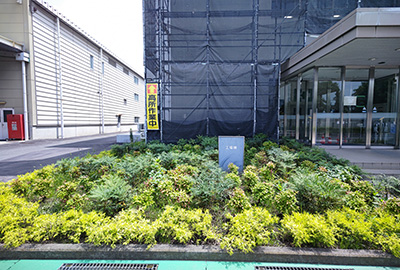
Tokyo Office
The Tokyo Office has established a biodiversity area on its premises, planting species native to the Musashino area, including bamboo-leaf oak and East Asian beautyberry, and manages and conserves the types and numbers of low-, medium-, and tall-growing trees.
We also participate in activities to protect the natural features of the region and share opinions with industry, government, academia, and the private sector.
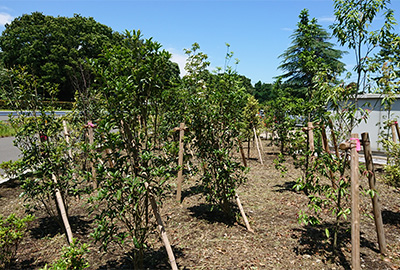
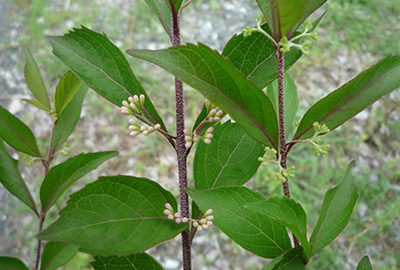
Utsunomiya Plant
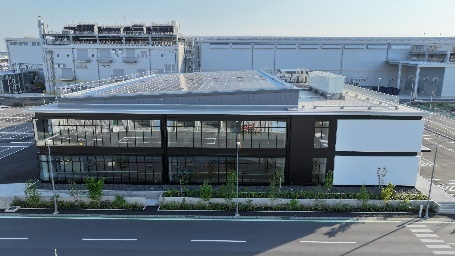
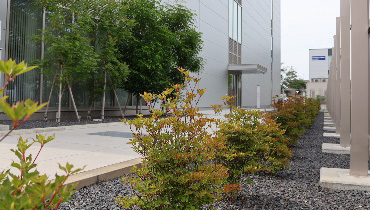
At the Utsunomiya Plant, the Main Administration Building, newly constructed in FYE March 2024, became the first SUBARU building to obtain Nearly ZEB*1 certification. For plantings around the Main Administration Building, native species are selected in accordance with the Landscaping Guidelines and managed with consideration for biodiversity.
- *1
- Nearly ZEB is a building that achieves at least a 75% reduction in primary energy consumption compared to a reference building and is very close to achieving Net Zero Energy Building certification
Subaru of Indiana Automotive, Inc. (SIA)
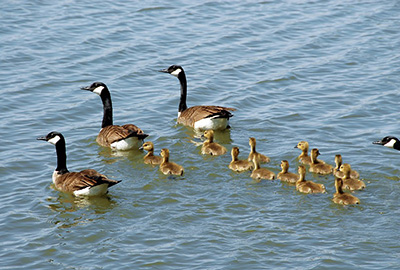
SIA has developed water retention areas and surrounding green spaces on plant premises with consideration for local wildlife habitats. As a result, wild Canada geese and herons use this area for feeding and resting, and a significant population of deer also resides in and around the plant site, which is surrounded by a rich natural environment. In 2003, the National Wildlife Foundation designated the site as a supportive wildlife habitat, marking the first such designation for an automotive production plant in the U.S.
Subaru of America, Inc. (SOA)
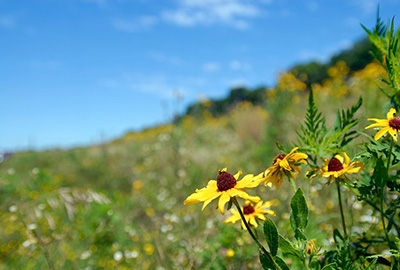
The SOA headquarters building has acquired silver LEED certification, with environmentally friendly planting incorporated into its environmental protection efforts. Specifically, the site features a Pennsylvania Horticultural Society-designed landscape including native perennials, hardwoods, and grasses to create a drought-resistant location. This well-maintained landscape provides a diverse habitat for wildlife.
In addition, SOA indirectly supports forest conservation activities by using Forest Stewardship Council (FSC)-certified paper whenever possible. FSC-certified paper is recognized for its role in promoting activities that protect forests, such as maintaining their stable carbon storage volumes.
North American Subaru, Inc. (NASI)
NASI has replaced a portion of the grassy plot on its premises with a Pollinator Garden of approximately 10,117 m2 in size. The goal of the Pollinator Garden is to create a natural planting garden that supports the work of pollinators (insects and other pollen carriers) and enhances their habitat. Natural planting also eliminates the need for pesticides and reduces irrigation water use by approximately 170 m3 annually.